
We hear the words inside our heads, the ones that scold and chastise us, compounding the belief that we are not good enough or don’t deserve to be happy. But have you ever wondered where those thoughts came from?
Sometimes, the way we speak to ourselves has its roots much further back than we realise. Messages about who we should be, how hard we should try, what makes us worthy of praise, or which emotions are acceptable can be absorbed when we are young. And some of those messages may have been passed down through families for generations.
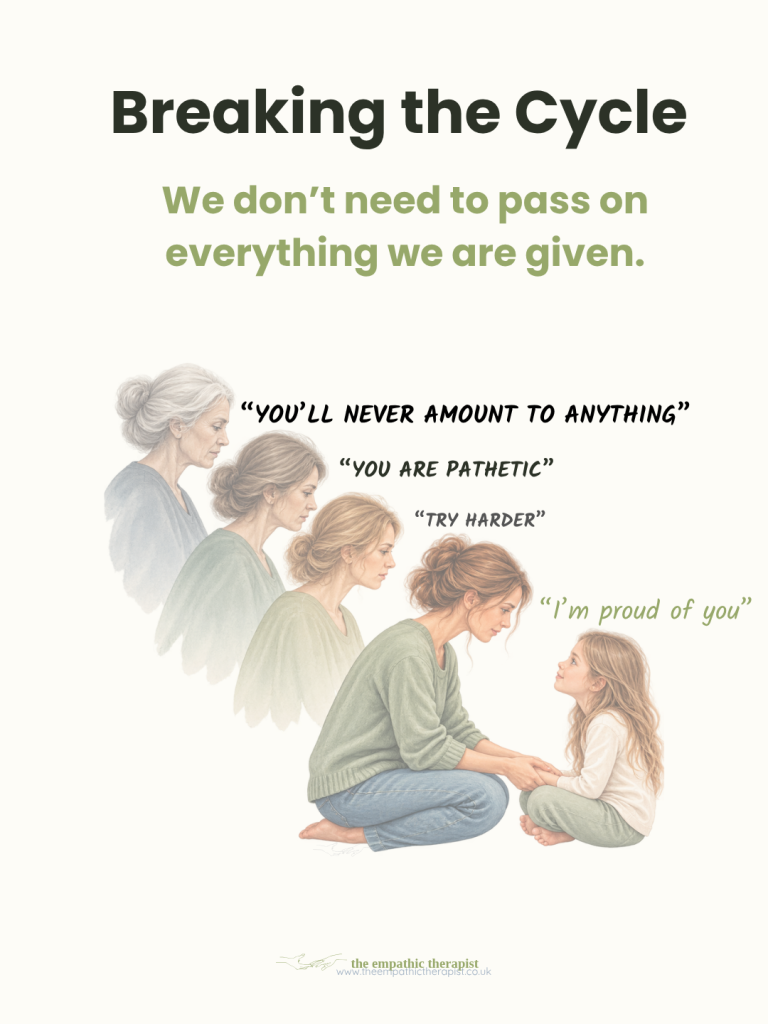
Imagine one generation being told, “You’ll never amount to anything.” Perhaps, when they have a child of their own, they don’t use those exact words, but the message becomes, “You’re pathetic.” Another generation decides they would never speak to their child like that and instead says, “Try harder.”
The words have changed. They may even have softened and come from a genuine desire to encourage rather than hurt. But underneath them, something can remain: I’m not enough. And then, somewhere along that line, somebody notices the pattern and decides they want to do something differently. “Try harder” becomes “I’m proud of you.”
This is what I was thinking about when I created Breaking the Cycle.
The messages we absorb
Those messages don’t only come from our families. They can also come from relationships, teachers, friendships and other experiences that have shaped us.
In person-centred counselling, we sometimes talk about conditions of worth. These are the messages we absorb about what we need to be, do or achieve in order to feel accepted, loved or good enough.
When I think about conditions of worth, I also think about the ways we can learn to present ourselves to the world. We may hide parts of ourselves, become the person we think other people need us to be, or learn that certain versions of us are more acceptable than others. Over time, that can become so familiar that we don’t necessarily realise we’re doing it.
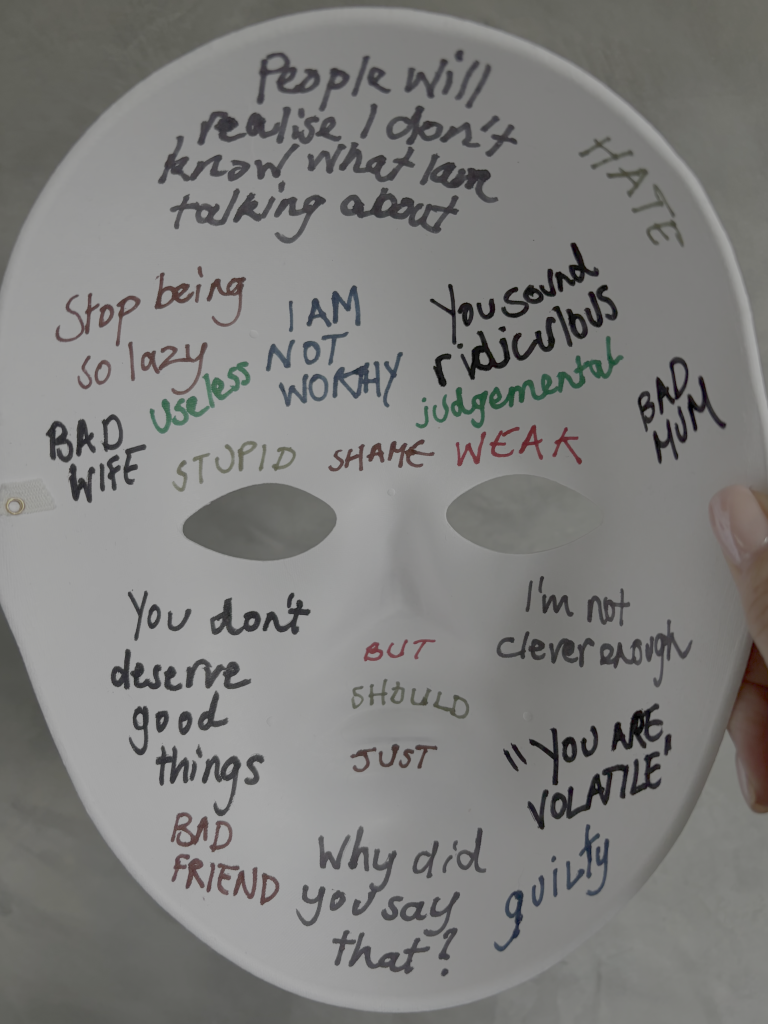
Interestingly, I found this blog much harder to write than I expected. When I became curious about why, I realised that it had awakened one of my own conditions of worth. It wasn’t something that came from my parents, which reminded me that the messages we carry don’t always begin at home.
I discovered this particular condition of worth during my training to become a counsellor. It wasn’t something that was clear to me from day one. It took weeks of digging until it finally dawned on me. Suddenly, it was like a formula:
X + Y = condition of worth
Bullseye! It hit me like an arrow to the heart.
After that, I began to understand myself better and find more compassion for myself. Importantly, I also became more aware of not passing that belief on to my own child. For me, that awareness is part of breaking the cycle.
When someone else’s words become our own
It isn’t always so straightforward, though. Sometimes the thoughts and messages we have absorbed become part of the way we speak to ourselves. We might recognise this as our inner critic: the voice that tells us we’re not good enough, that we’ve failed, that we should have tried harder or that other people are somehow doing life better than we are.
We may not even realise how often that voice is speaking. When we’ve heard the same message often enough, it can become so familiar that we simply accept it as true. “You’re stupid.” “Nobody will love you.” “You should have done better.” Eventually, it can become difficult to distinguish between something we once learned to believe and who we actually are.
Recognising that voice doesn’t necessarily make it disappear. We can understand where a belief came from and still find ourselves falling back into it, particularly at times when we’re struggling or feeling vulnerable. These patterns may have been with us for years, and becoming aware of them doesn’t mean they simply stop. But awareness can give us something we didn’t have before: the opportunity to reflect.
Where did I learn this? Whose words might I be carrying? Is this something I genuinely believe about myself, or something I learned to believe? Would I speak to somebody I love in the same way?
For me, those reflections are important. Rather than automatically accepting everything the inner critic says as fact, we can begin to notice when it has turned up and question whether we want to continue listening to the same old message. Becoming aware of these messages doesn’t necessarily make them disappear, but it can change our relationship with them. Much like grief, perhaps it isn’t always about making something go away, but learning how to live differently alongside it. Once we recognise that familiar voice, we can choose whether to listen to it or politely tell it to do one!
Breaking the cycle doesn’t mean getting it perfect
Breaking a cycle doesn’t necessarily mean making one enormous decision that changes everything. It can be noticing the words we’re about to use with ourselves and others, recognising an old reaction, questioning a belief we’ve always held about ourselves, or choosing to respond differently.
There will be times when we don’t notice until afterwards. That doesn’t mean we’ve failed. Becoming aware of these patterns is part of being able to make different choices. Our past experiences may have shaped us, but they don’t have to dictate what we do with them now or in the future.
For those of us who are parents, that may include thinking about what we want to pass on to our children. But breaking cycles isn’t only about parenting. It can affect the way we relate to partners, friends and other people in our lives, as well as the relationship we have with ourselves.
We can be determined that somebody we love will never hear the words that once hurt us, while continuing to repeat a version of those same words inside our own head. We can tell someone else that they don’t need to be perfect while expecting perfection from ourselves. We can tell our children, “I’m proud of you,” while finding it much harder to offer ourselves that same acceptance.
Perhaps breaking the cycle isn’t only about deciding what we don’t want to pass on. It can also be about looking at what we have carried with us and asking whether we still need to carry it. We may not be able to change the messages we received or the experiences that shaped us, but we can reflect on them, question whether they are really ours, and decide what we want to take forward.
We don’t have to pass on everything we were given.
If you recognise some of these patterns in yourself and would like somewhere to explore them, counselling can offer an opportunity to understand where they came from and what you want to take forward. You can find out more about how I work through my Counselling page.